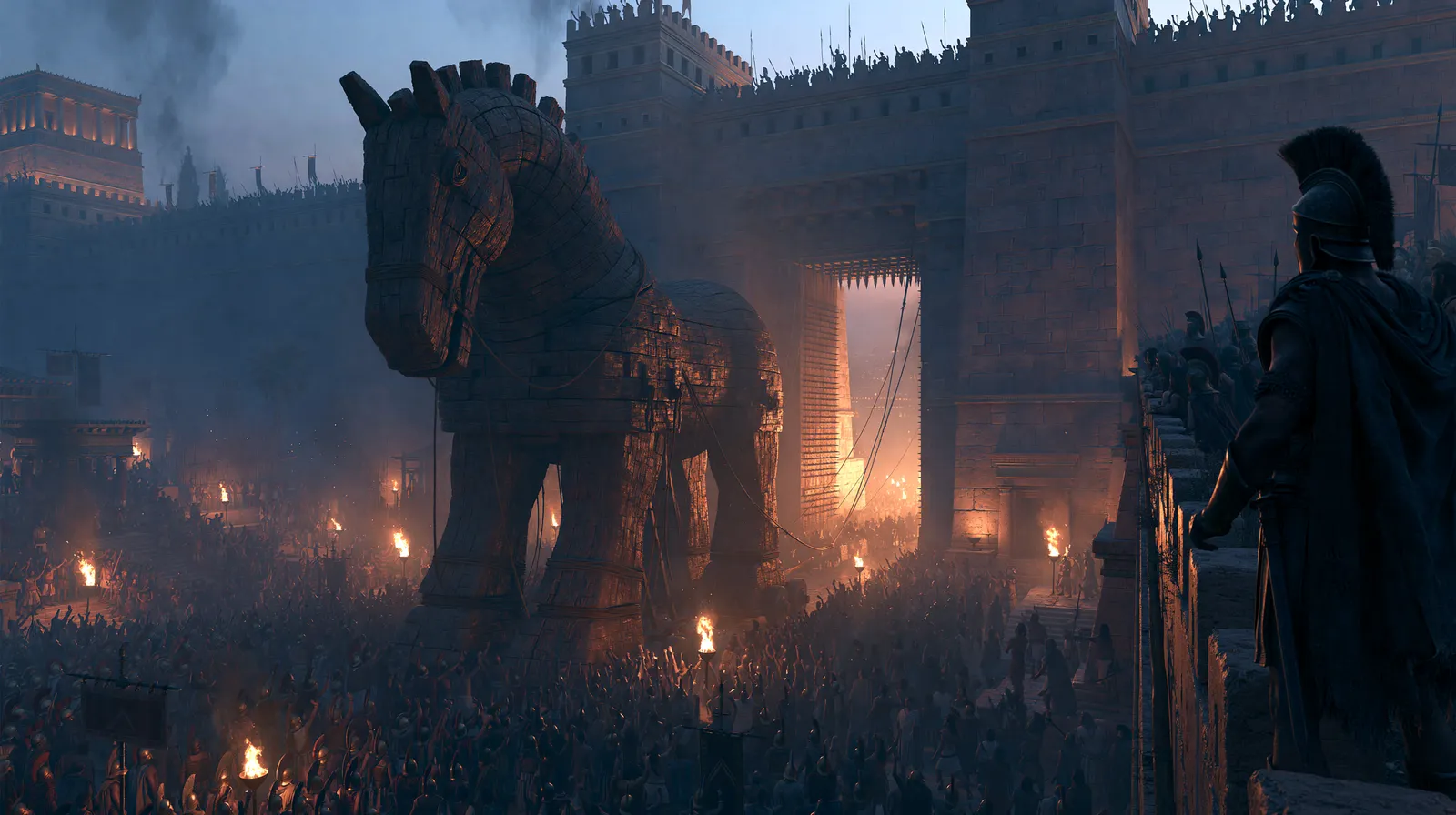

Tolkien didn't send Frodo to Mordor alone. He assembled nine.
A wizard to direct. A ranger to fight. An elf for precision. A dwarf for stubbornness. A hobbit to carry the one thing no one else could.
Each member had a specific role. Not because Tolkien needed a cast. Because one person doing everything would have failed at Rivendell.
Your AI strategy has the same problem.
The One-Prompt Trap
Most teams build their first AI workflow the same way. One prompt. One model. One massive instruction set asking the AI to research, analyze, write, check, and format — all in a single pass.
It works in demos. It falls apart in production.
The model loses focus halfway through. Output is mediocre across the board because no single part of the task got full attention. And when something goes wrong, you have no idea which part of the chain broke.
This isn't a model quality problem. It's an architecture problem.
What Is a Multi-Agent AI System?
A multi-agent system is an architecture where multiple AI instances each handle a specialized role — research, writing, validation, action — and pass work between each other in sequence. No single agent tries to do everything. Each does its piece and hands off to the next specialist in the chain.
A multi-agent system is multiple AI instances, each with a specific job, passing work to each other in sequence.
One AI researches. One AI writes. One AI checks the output. A coordinating AI decides who does what and when.
The agents don't need to know about each other. They do their piece and hand it off.
The Fellowship, Mapped to Real Roles
This is where the analogy earns its place.
Gandalf is the orchestrator. He doesn't fight every battle, negotiate with Théoden, and carry the ring simultaneously. He directs. He decides who goes where. He knows when to send Aragorn versus when to send Legolas. Your orchestrator agent does the same — it receives the task, breaks it into pieces, and routes each piece to the right agent.
Frodo is the task agent. One job. Carry it through. Focused and single-purpose.
Legolas is the retrieval agent. Fast, precise, pulls exactly what's needed from a knowledge base, a document, or the web.
Aragorn is the action agent. He takes what others surface and does something with it in the real world. Sends the email. Updates the CRM. Triggers the next workflow.
Gimli is the validation agent. Stubborn. Thorough. Refuses to let bad output through. The one who catches the hallucination before it becomes someone's problem.
What Does a Multi-Agent System Look Like in Practice?
Say a company wants to automate a competitive analysis report every Monday morning.
Without multi-agent: one model gets a giant prompt, tries to do everything, and produces something technically complete but not actually useful.
With multi-agent:
- The orchestrator receives the request and breaks it into steps.
- The retrieval agent pulls recent news, earnings data, and competitor updates.
- The analysis agent finds patterns and surfaces what changed.
- The writing agent drafts a clean summary in the company's format.
- The validation agent checks for gaps, hallucinations, and anything that looks off.
The report lands in the inbox ready to read. No agent tried to do someone else's job.
What This Costs (And Why It's Often Less)
Most people assume multi-agent means more expensive. It doesn't.
When you send one massive prompt to a frontier model trying to do ten things at once, you're paying for a large context window, getting inconsistent output, and burning tokens on instructions that don't apply to most of what you're asking.
Split the work across focused agents and two things happen. Tasks that don't require a powerful model — retrieval, formatting, basic validation — can run on smaller, cheaper models. You're not paying top-tier rates to copy data into a template.
Focused agents are also more reliable. Fewer retries. Fewer corrections. The total token spend per successful output goes down.
Think of it like staffing. You don't pay your most senior person to sort the mail. You match the cost of the resource to the complexity of the task.
You Probably Already Have All the Agents You Need
One thing that surprises people when they first look at multi-agent systems: you don't need five different AI products.
One model can play every role.
Claude can be the orchestrator in one call, the retrieval agent in another, and the validator in a third. The agents are just different instructions sent to the same model with different context and a different job.
This matters for two reasons. Cost stays predictable — you're working within one pricing model instead of stitching together subscriptions. Behavior stays consistent — you're not managing different output styles from different providers across the same workflow.
The architecture is real. The idea that you need a zoo of different AI tools to make it work is not.
Where It Breaks, and What You Can Fix
Most multi-agent systems don't fail completely. They degrade in one specific place. Which means you can fix one thing at a time.
The orchestrator is routing tasks incorrectly. The instructions telling it how to break down a request are too vague. Tighten those and everything downstream improves.
The retrieval agent is pulling the wrong documents. The problem is usually in how the knowledge base is organized, not the agent itself. Fix the source data and the agent fixes itself.
The validation agent isn't catching enough. The criteria are too generic. Give it a specific rubric instead of asking it to check for quality.
This is not an all-or-nothing system. It's a chain. Each link can be inspected, adjusted, and swapped out independently. You don't rebuild the whole pipeline because Gimli is underperforming.
The teams that get frustrated try to fix everything at once. The teams that get results find the weakest link and start there.
Should You Build or Buy Your Multi-Agent Framework?
Tools like CrewAI, AutoGen, and LangGraph give you pre-built multi-agent infrastructure. CrewAI is the most beginner-friendly, built around a role-based model where you define agents and assign tasks. AutoGen handles more complex, conversational multi-agent loops. LangGraph gives you the most control but requires more setup. None of them require you to architect the plumbing from scratch.
But you do need to understand the model to evaluate the tools. If you don't know what an orchestrator is supposed to do, you can't tell whether the one you're buying does it well. If you don't know what a validation agent should catch, you'll turn it off the first time it slows you down. Then wonder why the output quality dropped.
Where to Start
Most AI systems fail because they ask one thing to do too many jobs.
The fix isn't a better model. It's a better division of labor.
Find the part of your current AI workflow that produces the most inconsistent output. That's your Gimli — stubborn in the wrong way. Add a dedicated validation step there. See what it changes.
That's a more useful week than redesigning the whole pipeline.
Built for this
JESTR is built on this model
Specialized workers — SQL, RAG, synthesis — orchestrated behind a single natural-language interface. The Fellowship model, running on your data warehouse.
Try JESTR on your warehouse →